Aquatera supports inclusive energy transition through Participation of Women in Renewable Energy project in Indonesia
The Participation of Women in Renewable Energy (POWERE) project continues to make significant strides in promoting low-carbon energy transitions.
By supporting sustainable seaweed farming and marginalised women in off-grid coastal regions of the Global South, the project bridges the gap between green technology and social equity.
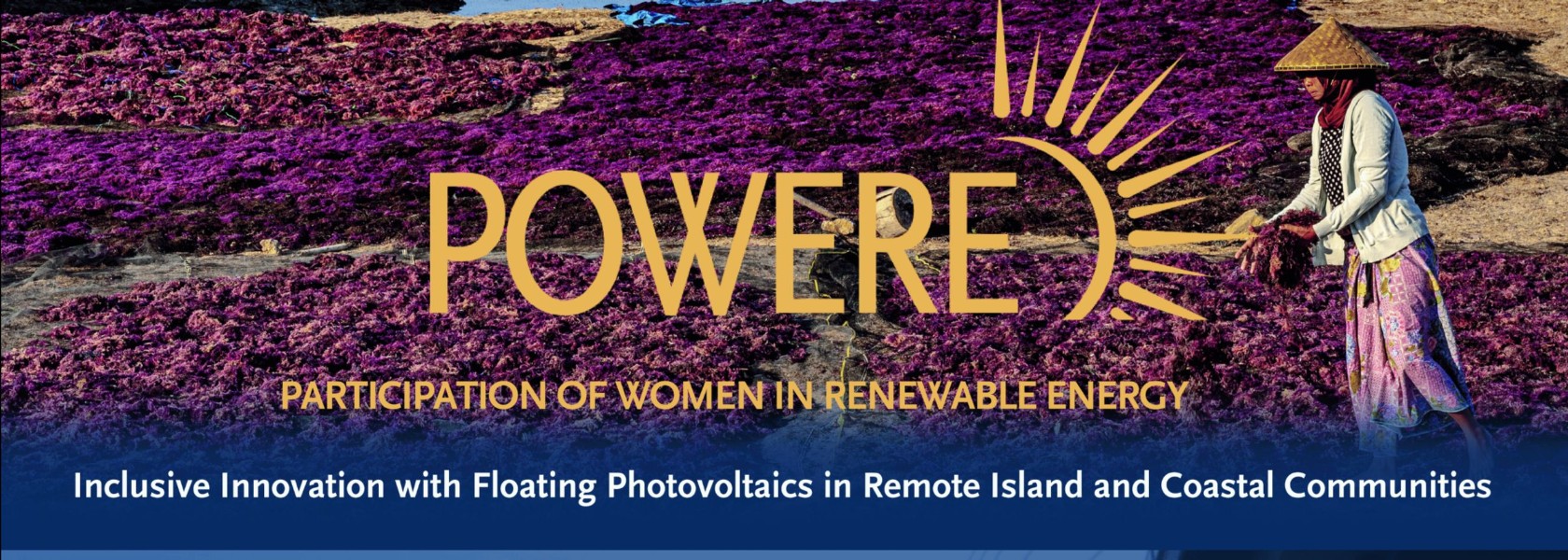
Aquatera is supporting the development of inclusive, low-carbon energy solutions for coastal communities in Indonesia through its role in the Participation of Women in Renewable Energy (POWERE) project.
Focusing on women-led seaweed farming groups, POWERE works alongside local groups to replace a historical reliance on diesel with Floating Photovoltaics (FPV). This innovative solar solution empowers women to become co-owners and active managers of energy infrastructure, which directly enhances their socio-economic resilience and long-term financial independence.
A core feature of this approach is participatory co-designing the solution and approach. This ensures that technical energy solutions are shaped directly by the people using them, aligning effectively with local livelihoods and cultural priorities. Aquatera leads this critical technical stream, encompassing site screening, resource assessment, and early-stage feasibility analysis.
This work combines specialised marine engineering with renewable energy expertise to evaluate how floating PV systems perform in dynamic coastal environments. Late last year, the team from Aquatera commenced essential fieldwork to collect the high-fidelity data required for evidence-based microsite selection. These findings will directly inform the scoping of Environmental and Social Impact Assessments (ESIAs) within pre-determined villages. In parallel, our action-learning workshops are fostering vital knowledge sharing regarding gender equality and the transition to a low-carbon economy.
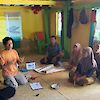
Over recent months, the team launched a series of local stakeholder engagement workshops involving Academic, Business, Community, and Government partners. These sessions ensure the project is shaped holistically and respects local nuances. Early-stage capacity-building activities have also been structured to ensure community participation leads to long-term system sustainability.
The next steps will focus on finalising site suitability mapping and data validation, consolidating community and energy demand insights, and preparing inputs for preliminary system design and scoping of environmental and social impacts.
The project’s impact is gaining significant momentum. Aquatera’s Dr Leuserina Garniati, Dr Mary Ann Franco, Maria Apolonia, and Dr Agung Iswadi—alongside the wider POWERE team—are currently preparing publications regarding the intersection of gender, seaweed, and energy. Initial findings were recently presented at the World Conference on Governance and Social Sciences (WCGSS) at Hasanuddin University, Indonesia and published by Atlantis Press (part of Springer Nature) as a conference proceeding under Advances in Social Science, Education and Humanities Research.
Furthermore, Dr Franco has been invited to co-author a chapter on 'Solar Anthropology' for an upcoming Routledge publication. In January, Professor Raminder Kaur and Dr Agung Iswadi attended the TEA@SUNRISE Symposium in Kuala Lumpur, where Dr Iswadi presented findings on energy demand and oceanography for floating PV design.
In the coming months, Aquatera will continue collaborating with the POWERE team to finalise site assessments, moving Indonesia’s coastal villages one step closer to a sustainable, sun-powered future.